+1-613-733-7999
info[@]newtechcongress.com



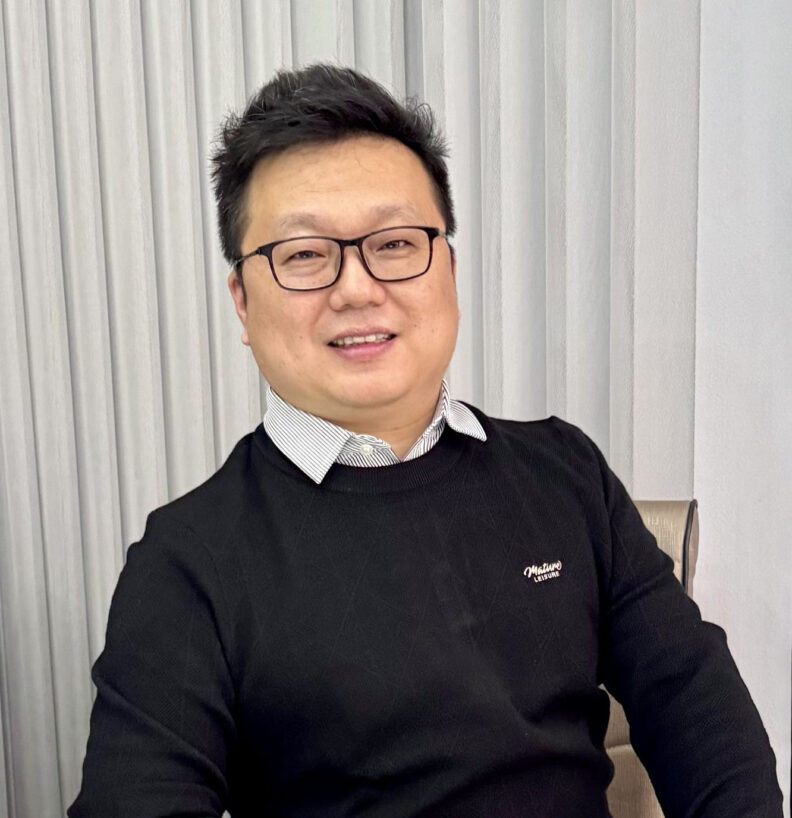
University of British Columbia, Canada
Plenary Speaker
Dr. Horacio Bach is a Clinical Assistant Professor in the Division of Infectious Diseases, Faculty of Medicine, University of British Columbia in Vancouver, Canada. He holds a PhD in the Department of Biotechnology, Faculty of Science, at Tel Aviv University, Israel, specializing in Molecular Microbiology and Biotechnology. Following a postdoctoral fellowship at the University of Minnesota (Medical Microbiology), he continued his career in the pharmaceutical industry, working as a principal investigator at the Taro laboratory in New York. Dr. Bach then completed a second postdoctoral fellowship at the University of British Columbia's Faculty of Medicine. His areas of interest include human and ruminant pathogen survival factors, nanomedicine, antibody engineering, rapid test development, and natural products. Currently, Dr. Bach has over 145 publications, including articles in international scientific journals and chapters in scientific books.
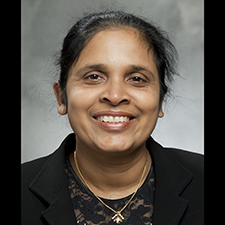
Washington State University, USA
Plenary Speaker

Dr. Bin Cao is an Associate Professor in the Gene and Linda Voiland School of Chemical Engineering and Bioengineering at Washington State University, where he is a faculty member in the Voiland College of Engineering and Architecture. His research focuses on using synthetic biology and chemical engineering to develop solutions for environmental and health challenges, such as combating antimicrobial resistance and removing emerging contaminants. He joined WSU from Nanyang Technological University in Singapore and received his Ph.D. in Chemical and Biomolecular Engineering from the National University of Singapore.
University of Victoria, Canada
Plenary Speaker
Dr. Chithrani did her bachelor of science at University of Colombo, Sri Lanka. She did a physics major and received a first class honors along with many other awards which includes the gold medal for faculty of science and gold medal for physics. She also received a probationary lecturer position based on her academic excellence. Recognizing her achievements, University of Toronto awarded her a scholarship to do her doctoral studies. During her doctoral studies at the department of Materials science and Engineering, she won many prestigious awards including NSERC, OGS, OGGST, and university of Toronto open scholarship. She also received an NSERC-PDF to carry on her postdoctoral work at institute of Biomedical engineering, University of Toronto. Currently, she is the director of the Nanoscience and Technology Development Laboratory at the department of Physics and Astronomy, University of Victoria, Canada. Dr. Chithrani leverages nanotechnology to create innovations that advance the care of cancer patients. She is using gold nanoparticles as a radiation dose enhancer in cancer therapy. This work is featured on the cover of radiation research journal. This paper won the highest impact paper award in 2018 by COMP (Canadian association of Medical physicist). She has also developed three dimensional tumor models to optimize bio-nano interface in cancer therapy. This work is featured on the cover of Nano-Micro Letters. Dr. Chithrani is considered as one of the leaders in the field of nanotechnology and her publications have received over 7500 citations in few years. Dr. Chithrani has earned a strong international reputation for her innovative research through her many review articles, book chapters, and invited presentations. She is an associate editor of many nanotechnology based journals. Her passion is to develop smart nanomaterials to improve exiting cancer therapeutics. She believes that many side effects due to chemotherapy can be reduced by controlled delivery of anticancer drugs using smart nanomaterials.
North Carolina State University, USA
Plenary Speaker
David S. Lalush is an Associate Professor in the Lampe Joint Department of Biomedical Engineering of The University of North Carolina at Chapel Hill and North Carolina State University. His past work has included several modalities of medical imaging, including PET, SPECT, X-ray CT, and MRI, focusing on computational methods for image processing, reconstruction, system design, and image analysis. His courses include Medical Imaging, Biomedical Signal Processing, and Data Science/Machine Learning in Medicine. Recently, his research involves the analysis of quantitative data in human-subject studies involving combined PET/MRI neuroimaging, multispectral orthopedic MRI, and cardiac signals.
Brunel University, UK
Plenary Speaker
Dr Edwin Routledge FRSB is an ecotoxicologist and sustainability specialist with more than three decades of experience at the interface of chemical pollution, environmental health, and regulatory science. His pioneering research on endocrine-disrupting chemicals has had significant policy impact, contributing to the inclusion of 17a-ethinylestradiol on the EU Water Framework Directive Watch List, new restrictions on parabens, and tighter controls of alkylphenol ethoxylates under REACH. Formerly a senior academic and Division Lead at Brunel University London, he has supervised numerous doctoral researchers, led major interdisciplinary programmes in sustainability and environmental science, and contributed to the Queen’s Anniversary Prize for endocrine disruption research. As Director of PEAAR Ltd, Dr Routledge now advises government agencies and industry on sustainable chemical management, environmental protection, and water treatment innovation. A member of the UK REACH Independent Scientific Expert Pool (RISEP), he works across toxicology, systems thinking, and sustainability science to support strategic, future-fit approaches to chemical regulation. A frequent keynote speaker and journal editor, Dr Routledge works at the interface of science, policy, and sustainability to help shape a safer and more sustainable chemical future.
New Jersey Institute of Technology, USA
Plenary Speaker
Omowunmi "Wunmi" Sadik is a Distinguished Professor and Vice Provost for Academic Faculty Affairs at the New Jersey Institutes of Technology (NJIT). She is the Director of NJIT's BioSMART Center. Sadik joined NJIT in 2019 after more than two decades at the State University of New York (SUNY) at Binghamton, where her exceptional research innovation and teaching performance saw her progress to full professorship and served as Director of the Center for Research in Advanced Sensing Technologies & Environmental Sustainability (CREATES). She received PhD in Chemistry from the University of Wollongong, Australia, and did her postdoctoral research at the US Environmental Protection Agency. Sadik has held appointments at Harvard University, Cornell University, and the Naval Research Laboratory. Sadik holds five US patents and has been recognized for research innovation in biosensors and sustainable nanotechnology. Her group focuses on the understanding of interfaces, in particular, electrochemical interfaces, and how to use this knowledge to pursue innovative bio (analytical) sensing technologies for improving human health and the environment. She has led her team in translating basic biosensor research into a portable, fully autonomous, and remotely operated sensing device known as an Ultra-Sensitive Portable Capillary Sensor, or U-PAC. Sadik's inventions have helped drive changes in many areas, including nanotechnology, pain management, and counter-terrorism. Professor Sadik has published over 220 peer-reviewed publications and has given over 450 invited lectures and conference contributions worldwide. Her works have appeared in journals such as the Journal of the American Chemical Society, NanoLetters, ACS Sensors, Analytical Chemistry, ACS Catalysis, Chemical Communications, and Biosensors & Bioelectronics. Sadik has secured over $9 million in research grants and contracts from government agencies and private sector institutions such as the National Science Foundation, National Institutes of Health, Environmental Protection Agency, Department of Energy, Defense Threat Reduction Agency, Naval Research Laboratory, and by private and non-profit sectors such as Procter & Gamble and the Bill & Melinda Gates Foundation.
Utah State University, USA
Plenary Speaker
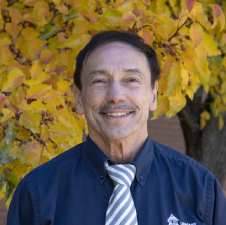
Dr. Ronald C. Sims currently serves as Co-director of the Sustainable Waste to Bioproducts Engineering Center (SWBEC) and Huntsman Corporation Endowed Professor at Utah State University . He is the founding head of the Biological Engineering department. With a B.S. degree in biology (University of Dayton, Ohio) and M.S. degrees in global public health (University of North Carolina at Chapel Hill) and environmental engineering (Washington State University) and a Ph.D. degree in biological and agricultural engineering (North Carolina State University), Dr. Sims embraces a multidisciplinary and interdisciplinary view of the world. He has worked outside of academia for Mobay Chemical Company, subsidiary of Bayer AG, as Supervisor of the Environmental Control Laboratory, for the United Nations Industrial Development Organization (UNIDO) and the U.S. State Department Agency for International Development (AID) as Director of the International Program in Environmental Aspects of Industrial Development, for Research Triangle Institute (North Carolina) as a process engineer for coal gasification in the Southeast U.S., and for the U.S. Environmental Protection Agency (U.S. EPA) at the Robert S. Kerr Environmental Research Center (Oklahoma). He also served as Director of the State of Utah Water Research Laboratory for seven years. He also currently serves as Editor-in-Chief of Bioresources and Bioproducts.
University of California, Irvine, USA
Plenary Speaker
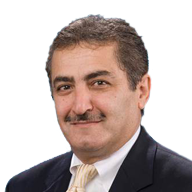
Mosallam's research covers topics related to structural and earthquake engineering with a specialization in advanced composites and hybrid systems for infrastructure applications. In addition, he has been involved in several major research projects dealing with the development and verification of innovative seismic repair and rehabilitation systems for reinforced concrete, masonry, wood and steel structures. Based on the research works conducted by Mosallam and other researchers at UCI, two demonstration projects introducing the use of innovative composite systems were completed including the Sauvie Island Steel Bridge (Portland, Oregon) for the feather-weight sandwich composite strengthening technology and the Schuyler Heim Bridge (Long Beach, California) for the hybrid composite decking. Currently, Mosallam is involved in several funded research projects including the development of a Diagnostic/Prognostic System (DPS) for innovative repair and health monitoring of military composite bridges. The DPS system is being developed jointly by different organizations including Alpha Star Corps and the Boeing Company for the US Tank-automotive and Armaments Command (TACOM). The DPS protocol incorporates the latest technologies of optical fibers and remote sensing technologies. Funded by Ohio DOT through the Federal Highway Administration (FHWA) TEA-21 Program and with collaboration with University of Akron, a major research project is underway aiming at developing an innovative collisions protection system for highway bridges using remotely-monitored multilayered honeycomb system. Mosallam is the of the authors of the American Society of Civil Engineers (ASCE) Structural Design Manual for Composite Joints and the co-author of the ASCE Prestandard Documents for Pultruded Composites. He also serves on the Editorial Board of the Composites: Part B Journal and is the guest editor of its special issues on infrastructure applications.
University of California, Berkeley, USA
Plenary Speaker
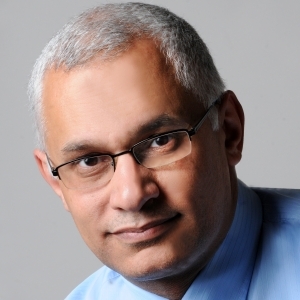
Prof. Khalid M. Mosalam received his B.S. and M.S. degrees in Structural Engineering from Cairo University and his Ph.D. from Cornell University. In 1997, he joined the Department of Civil and Environmental Engineering at the University of California, Berkeley, where he is the Taisei Professor of Civil Engineering and Director of the Pacific Earthquake Engineering Research (PEER) Center. His research focuses on the performance and health monitoring of structures, the assessment and rehabilitation of essential facilities, and building energy efficiency and sustainability. His work spans large-scale computational modeling and experimental testing, including hybrid simulation. Prof. Mosalam’s contributions have been recognized with numerous awards, including the ASCE Huber Civil Engineering Research Prize (2006), the UC Berkeley Chancellor’s Award for Public Service (2013), the EERI Outstanding Paper Award in Earthquake Spectra (2015), the ASCE Best Journal Paper in Materials and Structural Response (2020), and the Hojjat Adeli Award for Innovation in Computing (2021). He is a Corresponding Member of the Mexican Academy of Engineering in Civil Engineering and a Fellow of ASCE.
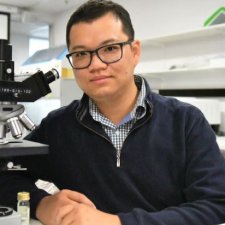
Flinders University, Australia
Plenary Speaker
A/Prof. Vi-Khanh Truong is an ARC Future Fellow, Fulbright Fellow, and Associate Professor in Biomedical Nanotechnology at Flinders University, where he leads the Biomedical Nanoengineering Laboratory. He received his PhD in Nanobiotechnology from Swinburne University of Technology in 2012 and has since built an international reputation in biointerface engineering, nanomaterials, and plasma-enabled surface technologies. His career bridges academia and industry, with early recognition including the International Titanium Association’s award for innovation in implant surfaces, research fellowships at Hannover Laser Zentrum (Germany) and CNRS (France), and industrial appointments at BASF and BlueScope focused on antimicrobial coatings and agricultural nanotechnologies. As a Fulbright Fellow, he expanded global collaborations to accelerate the translation of nano-enabled innovations into biomedical and environmental applications. His research integrates antimicrobial biomaterials, liquid metal bioelectronics, plasma surface engineering, and functional food nanotechnology, targeting challenges in infection control, sustainability, and health. He has published over 180 papers in high-impact journals (e.g., Nature Materials, Advanced Materials, Nature Communications, ACS Nano, PNAS), holds multiple PCT-stage patents, and is actively commercializing technologies in medical devices, wound care, sutures, and sustainable materials. Dr. Truong’s vision is to engineer smart, sustainable materials that improve human health while addressing global ecological challenges.
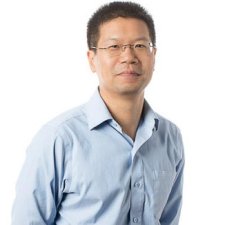
Concordia University, Canada
Keynote Speaker
Zhibin Ye is a Professor at Department of Chemical and Materials Engineering of Concordia University (Montreal, Canada). He received his Bachelor and Master’s degrees from Zhejiang University (China) in 1996 and 1999, respectively, and his PhD degree from McMaster University in 2004, with all in chemical engineering. He started his independent academic career as an Assistant Professor at Laurentian University in 2004, and was promoted to Associate Professor and Professor in 2009 and 2012, respectively, at Laurentian. He moved to Concordia University in 2017. Zhibin has research interest in organic electrode materials for rechargeable batteries and supercapacitors, carbon nanomaterials, 2D materials, polymers, advanced polymerization techniques, catalysis, nanocomposites, etc. Zhibin is a Fellow of Canadian Academy of Engineering and Royal Society of Chemistry.